
Disclosure: This guide is published by Mariden Resort. While we've aimed for accuracy, we encourage you to research both areas for your trip.
🗺️ Route Map from Mariden Resort
The map below shows the driving route from Mariden Resort in Del Carmen to Cloud 9, approximately 25 km (40 minutes by motorbike). See Siargao scooter rental rates for current pricing.
Driving route from Mariden Resort to Cloud 9 Surfing Area · Click marker for distance & drive time
Cloud 9 is not just Siargao's most famous wave. It is one of the most recognisable reef breaks on the planet. A thick, hollow right-hand barrel that pitches over a shallow coral shelf in General Luna, it has hosted the Siargao International Surfing Cup since 1994 and put the Philippines on the global surf map. Whether you're here to paddle out or just watch from the boardwalk with a coconut in hand, this guide covers everything you need to know before you arrive.
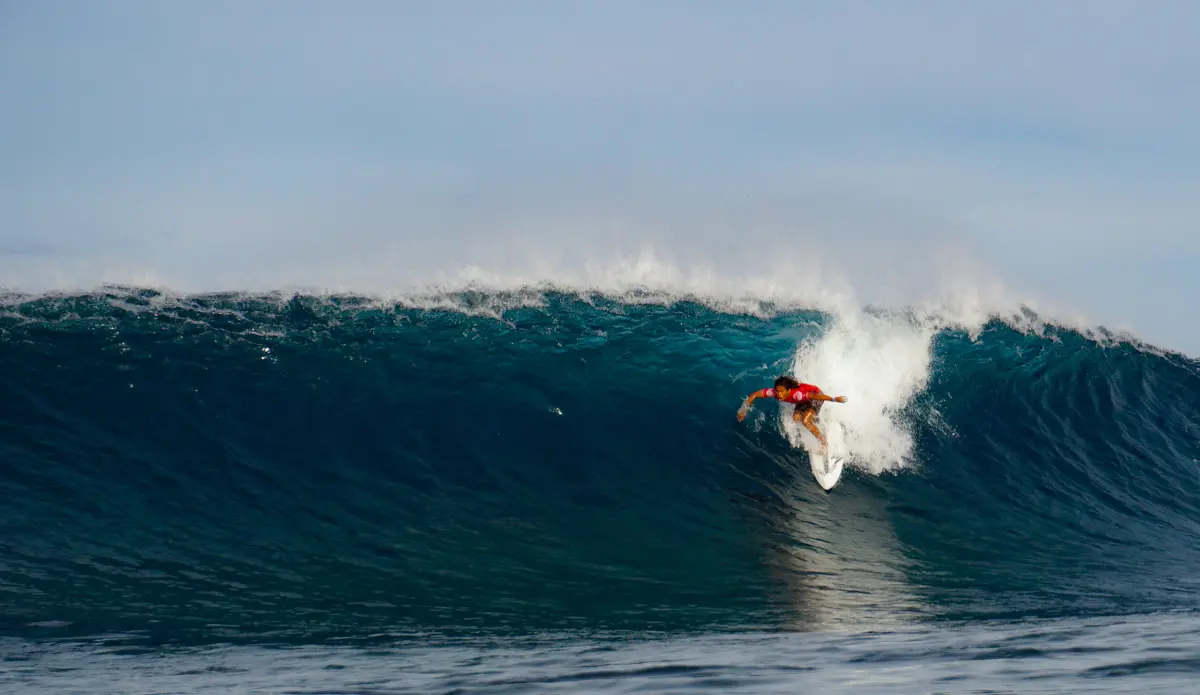
Photo by Mark Suarkeo / The Inertia
Quick Facts
Cloud 9 at a Glance
| Detail | Info |
|---|---|
| Location | Barangay Cloud 9, General Luna, Surigao del Norte |
| Wave Type | Hollow right-hand reef break |
| Reef Depth | 1–2 metres (~3–6 ft) at low tide |
| Best Swell Direction | Northeast / East (Pacific groundswell) |
| Best Wind | Southwest (offshore) |
| Peak Surf Season | September – November |
| Skill Level | Intermediate to Advanced (beginners banned) |
| Boardwalk Entrance Fee | ₱50–100 (~$1–2 USD) per person Free for Surigao del Norte residents (show local ID) |
| Boardwalk Hours | 7AM – 5PM (fee collected) |
| Distance from General Luna | ~5 km, 10 min by habal-habal |
| Distance from Del Carmen (Mariden Resort) | ~20–25 min by motorbike |
| Annual Competition | Siargao International Surfing Cup (WSL QS 6000, held October) |
What Makes Cloud 9 World-Famous
Cloud 9 is a hollow right-hand reef break that peels over a sharp coral shelf in the warm, clear waters off General Luna. It has appeared in international surf publications, world surf ranking events, and more travel bucket lists than any other wave in Southeast Asia. The name itself has become shorthand for Siargao. When people say they're going to "Cloud 9," they often mean the entire island.
What separates it from other Philippine surf spots is the mechanical consistency of the barrel. When northeast groundswells push in from the Pacific, typically driven by typhoon activity in September and October, the wave pitches in a thick, cylindrical tube over the reef. On a clean easterly swell with offshore southwest winds, Cloud 9 can produce near-perfect barrels on every set wave. That predictability is rare, and it's what has made it a fixture on global surf itineraries for three decades.
The Wave in Numbers
- Reef depth: 1–2 metres at low tide. Shallow enough to feel on a wipeout, deep enough to surf safely if you know what you're doing.
- Wave face: Typically 4–6 feet during peak season; 6–12 feet on the biggest swells; flat or waist-high during the dry season
- Wave direction: Right-hander; breaks left to right when viewed from the beach, meaning surfers ride toward the channel
- Best swell: Northeast and east groundswells, generated by Pacific typhoons between September and November
- Best wind: Southwest offshore, the prevailing direction during much of the Filipino dry season, keeping the face clean and the barrel open
Cloud 9 is consistently ranked among the best surf breaks in Asia and regularly appears on global lists of must-surf reef breaks. Its combination of barrel quality, warm water (around 28°C / 82°F year-round), and stunning tropical setting keeps professional surfers returning every year for the Siargao International Surfing Cup.
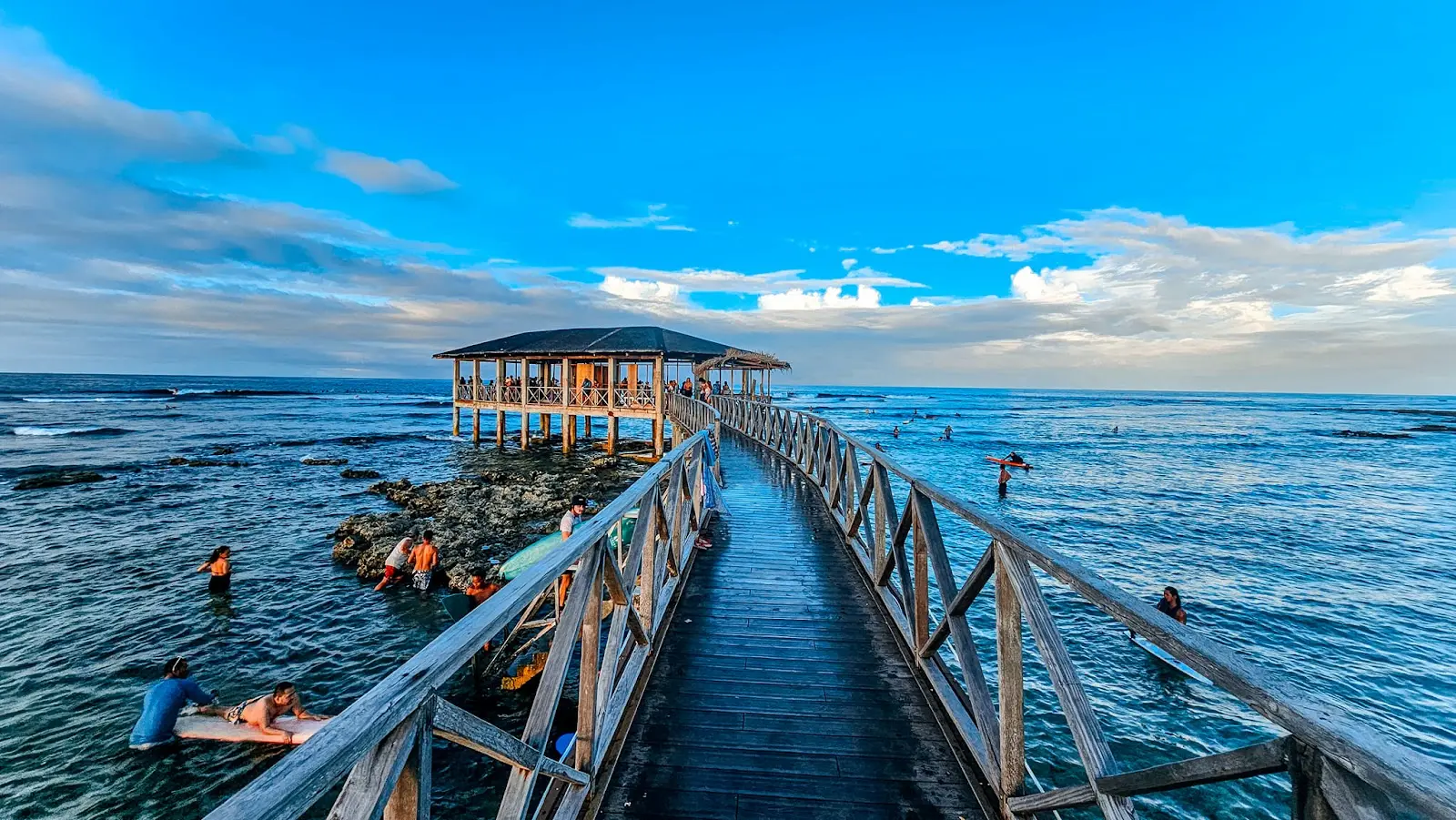
Not just for surfers: The boardwalk and viewing deck make Cloud 9 one of the few world-class surf breaks where non-surfers can watch from a front-row seat directly above the breaking wave. It's a legitimate bucket-list experience even if you never touch a board.
The Boardwalk & Viewing Deck
Extending over the water alongside the break, the Cloud 9 boardwalk is a wooden walkway that ends at an elevated viewing tower, positioned directly above the reef where the wave breaks. For non-surfers, this is the single best way to experience Cloud 9: you can watch surfers drop into barrels just metres below your feet, with nothing between you and the Pacific.
Practical Details
- Entrance fee: ₱50–100 per person (~$1–2 USD). Surigao del Norte residents enter free; just show a valid ID with your local address. The fee is collected at the boardwalk entrance from around 7AM to 5PM. Surfing the break itself is always free.
- Hours: The boardwalk is accessible throughout the day, but the fee is collected 7AM–5PM. Arriving before 7AM (common among photographers chasing sunrise) is free.
- Best time for photography: Early morning (6–8AM) gives you soft golden light hitting the wave face with fewer people on the boardwalk. Midday is harsh overhead light but maximum surf action during peak swell.
- Best camera angle: The tower offers the classic overhead shot of a surfer in the tube. From the boardwalk railing at water level you can shoot at the breaking lip for dramatic close-ups. Bring a zoom or telephoto if you have one.
- What to expect: Stalls selling food, coconuts, and cold drinks line the path leading to the boardwalk. Souvenir shops and board rental shacks cluster around the entrance area.
Sunrise tip: The boardwalk faces east: sunrise over the Pacific, light on the wave. If low tide lines up with early morning from September to November, you'll have the wave firing and the light perfect simultaneously. Ask locally the night before what time low tide is and when the swell is expected to be biggest.
Can You Surf Cloud 9?
This is the most important question to answer honestly, because Cloud 9 is beautiful and iconic in a way that makes people want to be in the water. The reef will punish that impulse if you're not ready for it.
The Honest Skill Assessment
Cloud 9 requires solid intermediate to advanced surfing ability. Specifically:
- At 3–4 feet: A competent intermediate surfer who can confidently take off on a steep drop, trim along a fast face, and handle an occasional wipeout on reef can manage. This is the most forgiving size.
- At 5–6 feet: This is advanced territory. The barrel becomes heavier, the hold-downs are longer, and the reef is less forgiving. You need experience in hollow waves.
- At 6 feet and above: Expert only. These are serious Pacific swells with long hold-downs, strong rip currents, and genuine danger on the reef.
Cloud 9 has officially banned beginner surf lessons at the break. It is the first surf break in the Philippines to do so, and the restriction exists for good reason. Local surf instructors are not permitted to take novices into the water here.
Where Beginners Should Go Instead
The good news is that three excellent learner breaks are within walking distance of Cloud 9:
- Jacking Horse: sand-bottom beach break right next to Cloud 9, perfect for absolute beginners. Soft takeoffs, forgiving wipeouts, and no reef risk.
- Quicksilver: another sand-bottom break nearby, slightly more powerful than Jacking Horse. Good for surfers who've had a few lessons and want to build confidence before graduating to reef.
- Stimpy's: mellower right-hander suited to intermediate surfers who want a reef break experience without Cloud 9's intensity. A good stepping stone.
For a complete breakdown of every Siargao surf spot by skill level, see our full Siargao surfing guide. If you're intermediate and want to try a more manageable reef break first, Pacifico Beach on the north coast also offers excellent surfing at a less punishing break before committing to Cloud 9.
Best Time to Surf Cloud 9
Peak Swell Season: September – November
The months from September to November are Cloud 9 at its best. Pacific typhoon season generates powerful northeast groundswells that travel thousands of kilometres before hitting the reef in perfect form. September and October consistently produce the biggest, most consistent surf. It's competition season for a reason. For a detailed month-by-month breakdown of Siargao's weather and swell conditions, see our guide on the best time to visit Siargao.
Dry Season: March – May
The dry season brings smaller but cleaner conditions. Wave faces of 2–4 feet are common, making this the best window for confident intermediates who want Cloud 9's hollow shape without the heavier swell. Southwest offshore winds are more consistent in this period, producing clean, groomed faces.
Tide Windows
Cloud 9 works on most tides but is at its best on mid to high tide, when there's enough water over the reef to soften the wipeout landing but the wave still pitches with power. At very low tide the reef becomes dangerously shallow; some surfers choose to sit out the lowest hour of a falling tide. Watching the break for 20–30 minutes from the boardwalk before paddling out will tell you more about current conditions than any forecast.
Morning vs. Afternoon
- Morning (6–10AM): Offshore winds are often lightest and glassiest in the early hours. The lineup is less crowded. Best for photography, as wave faces catch the low-angle light. Recommended if you have a choice.
- Afternoon (2–5PM): Wind tends to pick up or go onshore in the afternoon, making conditions choppier. More crowded. Avoid during strong northwest monsoon months.
Competition week (October): During the Siargao International Surfing Cup, the break is reserved for competitors during heats. Spectating from the boardwalk is still possible and the atmosphere is electric, but free surfing at Cloud 9 is limited during competition windows. Check the WSL event schedule before you go.
Surf Lessons & Board Rental
A cluster of surf shops and schools operates in the General Luna and Cloud 9 area. Here's what to expect on pricing:
| Service | Price (PHP) | USD Approx. | Notes |
|---|---|---|---|
| Beginner lesson (1 hr) | ₱500–1,000 | ~$9–18 | Includes board + certified instructor; conducted at Jacking Horse or Quicksilver, NOT Cloud 9 |
| Intermediate coaching session | ₱1,500–3,500 | ~$27–63 | Video analysis and technique feedback; some schools include Cloud 9 sessions for qualified surfers |
| Board rental (per hour) | ₱150–300 | ~$3–5 | Softboards cheaper; shortboards and performance boards at the higher end |
| Board rental (per day) | ₱300–500 | ~$5–9 | Full-day rates available at most rental shacks |
| Rash guard / wetsuit top rental | ₱100–200 | ~$2–4 | Worth renting for reef protection and sun cover |
Prices based on 2025–2026 visitor reports. Rates may vary by school and season. Always confirm pricing before your session.
Tips for Booking Lessons
- Book early during peak season (Sept–Nov): Popular instructors fill up fast during swell windows. Ask your accommodation to connect you with a local school the evening before.
- Look for SISA-accredited instructors: The Siargao Island Surfing Association (SISA) certifies local instructors and sets safety standards. Ask if your instructor is SISA-registered.
- Don't skip the rash guard: The tropical sun and reef contact make it essential, not optional.
- Bring cash: Most surf shops and rental shacks are cash-only. There are ATMs along the main highway in General Luna on the road toward Cloud 9, so withdraw before you reach the break.
Stay on Siargao & Save 10%
Mariden Resort in Del Carmen puts you 20–25 minutes from Cloud 9 and 5 minutes from Sayak Airport, a comfortable base for surfing day trips without General Luna's prices. Book direct and use code DIRECT10 for 10% off your stay.
Explore Our RoomsCompetition Season
The Siargao International Surfing Cup
The Siargao International Surfing Cup is the oldest and most prestigious surf competition in the Philippines, held annually at Cloud 9 since 1994. It was initiated by former Governor Lalo Matugas and former Mayor Jaime Rusillon as a way to put Siargao on the global map. It worked. The event is now sanctioned by the World Surf League (WSL) as a Qualifying Series (QS) event, upgraded to QS 5000 in 2024 and QS 6000 in 2026.
The 2026 edition runs October 16–25. Competitors earn WSL ranking points, and past events have attracted international professionals alongside top Filipino surfers. The 2025 champions were Bronson Meydi (men's) and Ziggy Aloha Mackenzie (women's).
What the Island Looks Like During Competition Week
Competition week transforms General Luna and the Cloud 9 area. Expect:
- Larger crowds: Surf fans, media, and sponsors descend on General Luna. Accommodation fills up fast, so book months ahead if you plan to visit during this window.
- Electric atmosphere: The boardwalk is packed during heats, with commentary, live music, and a festival feel around the beach entrance.
- Restricted surf windows: The break is reserved for competitors during heats. Free surfing is possible in the mornings and between heat windows; check the daily schedule posted at the beach.
- Higher prices: Accommodation, food, and transport rates rise during competition week. Budget accordingly or stay in Del Carmen where prices are more stable year-round.
Visiting for the competition: If you're coming specifically to watch, arrive a day or two before the event starts to secure accommodation and get your bearings. The opening day draws the biggest crowds; heats continue for up to 10 days depending on swell.
Getting to Cloud 9
From General Luna (Closest Base)
Cloud 9 is approximately 5 km north of General Luna town centre, straight up the same road. Options:
- Habal-habal (motorcycle taxi): ₱50–100 (~$1–2 USD) each way. Fastest and most convenient. Wave one down anywhere on the main road; they run constantly.
- Rental scooter: ₱350–500/day (~$6–9 USD) from General Luna. Most surfers rent a motorbike for the whole trip, giving you the flexibility to arrive at dawn for the best conditions. See our transportation guide for current rental rates.
- Tricycle: ₱150–200 (~$3–4 USD) one way, slower but good with luggage or boards.
Travel time: ~10 minutes.
From Del Carmen (Mariden Resort Base)
Del Carmen sits north of General Luna, making Cloud 9 a straightforward 20–25 minute southward ride. Take the main coastal road (Siargao Circumferential Road) south through General Luna and continue to Barangay Cloud 9. A rental scooter from Del Carmen gives you the most flexibility for early morning sessions.
Del Carmen guests have one significant advantage: the drive to Cloud 9 passes General Luna, meaning you can combine a Cloud 9 session with lunch or dinner in General Luna on the same trip, no backtracking needed. From General Luna, the food options and nightlife are excellent.
From Sayak Airport (Siargao Airport)
Sayak Airport is approximately 5 minutes by road from Mariden Resort in Del Carmen. From the airport to Cloud 9:
- Take a tricycle or habal-habal from the airport to the main road (~5 min, ₱50–100)
- Head south on the Circumferential Road through Del Carmen and General Luna
- Continue to Barangay Cloud 9 (~25–30 min total from airport)
Alternatively, stay at Mariden Resort in Del Carmen first, then day-trip to Cloud 9 whenever surf conditions and swell timing are right, rather than committing to General Luna accommodation before you know the forecast. See our Siargao itinerary guide for how to plan your surf timing around a multi-day stay.
What to Do Around Cloud 9
The area around Cloud 9 has grown into a compact hub with food, drink, and surf culture concentrated within a few hundred metres of the boardwalk entrance.
Food & Drinks
- Fresh coconuts and buko juice: vendors set up along the boardwalk path daily. ₱30–50 (~$0.55–0.90 USD) for a whole coconut, chilled and ready to drink.
- Food stalls and carinderias: local canteens near the boardwalk entrance serve rice meals, grilled fish, and snacks. Budget ₱100–200 (~$2–4 USD) for a full meal.
- Beachside cafes and restaurants: a strip of surfer-oriented cafes clusters in the Cloud 9 and General Luna junction area, serving everything from acai bowls to pasta. Prices are higher than local carinderias but good for a post-surf meal.
Nearby Surf Breaks to Explore
Once you're comfortable at Cloud 9's immediate area, these breaks are within a short ride:
- Jacking Horse: sand bottom, right next to Cloud 9. Beginner and intermediate friendly. Good fallback on flat or small-swell days.
- Quicksilver: sand-bottom break a short ride away. Similar vibe to Jacking Horse with slightly more power on medium swells.
- Stimpy's: fun, mellower right-hander for intermediates. Less crowded than Cloud 9 and good for building reef experience.
- Pacifico Beach (Big Wish): about 30–40 minutes north, an excellent alternative on days when Cloud 9 is too crowded or the swell direction doesn't suit. See our full guide for details.
Souvenirs & Shopping
Small souvenir shops near the Cloud 9 entrance sell Siargao-branded clothing, reef-safe sunscreen, rash guards, and surf accessories. Prices are fair; this is not a tourist-trap zone. If you forget sunscreen or wax, you'll find it here.
No ATMs at Cloud 9 itself: There are ATMs along the main highway in General Luna on the way to Cloud 9. Withdraw before you arrive at the break; ₱500–1,000 per person is a reasonable day budget covering entrance fee, food, drinks, and transport back.
Frequently Asked Questions
No. Cloud 9 is a powerful reef break over a shallow coral shelf, not suitable for beginners or even early intermediates. At smaller sizes (3–4 feet) it can be manageable for experienced intermediates, but the sharp reef, fast barrels, and strong currents make it genuinely dangerous for novices. Local authorities have actually banned beginner surf lessons at Cloud 9. Beginners should learn at nearby sand-bottom breaks like Jacking Horse or Quicksilver, both within walking distance of Cloud 9.
Yes, for most visitors. The Cloud 9 boardwalk and viewing deck charge ₱50–100 per person (~$1–2 USD), collected at the entrance from around 7AM to 5PM. Surigao del Norte residents enter free; just show a valid ID with your local address. Surfing the break itself is always free; the fee only covers boardwalk and viewing tower access.
September and October are peak swell months at Cloud 9, driven by typhoon groundswells from the Pacific. November can also be excellent. The dry season (March–May) brings smaller but cleaner conditions suitable for intermediates. December through February is monsoon season on Siargao's west coast; Cloud 9 on the east side can still fire, but onshore winds are more common.
Cloud 9 is approximately 5 km north of General Luna town proper, about a 10-minute ride by habal-habal (motorcycle taxi). Expect to pay ₱50–100 (~$1–2 USD) each way. Many visitors also rent a scooter and ride themselves.
Cloud 9 is a serious wave breaking over a sharp, shallow coral reef at 1–2 metres depth. Wipeouts at medium to large size can result in reef cuts or worse. For spectators on the boardwalk it is completely safe. For surfers, the danger scales directly with wave size and experience level. At 3–5 feet, a competent intermediate can manage; at 6+ feet it demands advanced skill. Never paddle out alone, know your exits, and always watch the break from the boardwalk before entering the water.
The Siargao International Surfing Cup is the Philippines' longest-running surf competition, held annually at Cloud 9 since 1994. It is sanctioned by the World Surf League (WSL) as a Qualifying Series (QS) event, upgraded to QS 5000 in 2024 and QS 6000 in 2026. The 2026 event runs October 16–25. Past champions include local heroes and international pros who compete for WSL ranking points on one of the world's most photogenic reef breaks.
Beginner surf lessons near Cloud 9 typically cost ₱500–1,000 per hour (~$9–18 USD), usually including a board and certified instructor. Note that beginner lessons are not permitted at Cloud 9 itself; instructors take learners to the safer sand-bottom breaks nearby (Jacking Horse or Quicksilver). Board rentals alone run ₱150–300 per hour (~$3–5 USD) for experienced surfers.
Siargao Base Camp: 20 Minutes from Cloud 9
Mariden Resort in Del Carmen is a quiet, affordable base for your Siargao surfing trip. Cloud 9 is a 20-minute ride south; Sayak Airport is 5 minutes north. Book direct for the best rate. Use code DIRECT10 for 10% off.
Explore Our Rooms